

My About-face on AI
Updated: Jul 26
Now? Not so much.
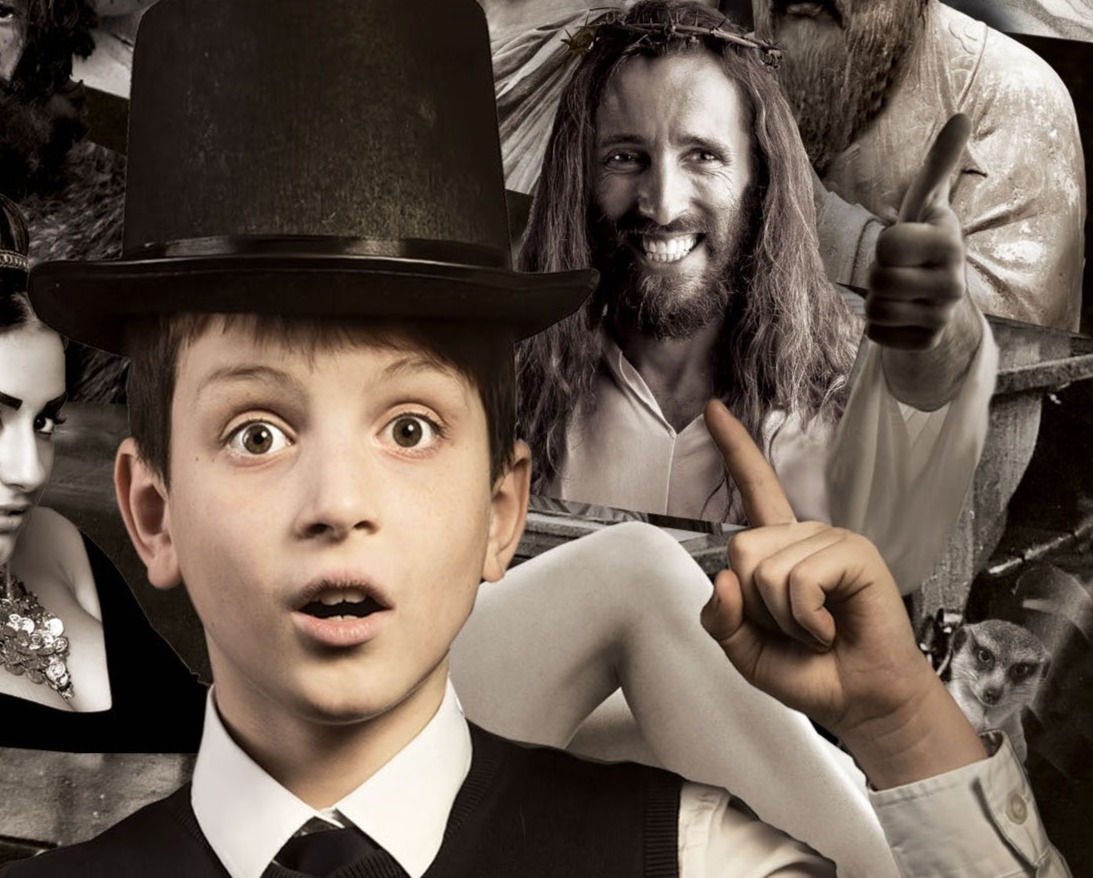
My Lightbulb Moments in Human History books were written before AI was a thing. They heavily relied on illustrations, and I cannot tell you how much money I spent on licensing images from Adobe or other suppliers. I also cannot tell you how much time I spent hand-editing or Photoshopping these images to appear as I wanted them to appear.
It was a no-brainer then that I became an early adopter of AI art, as it made my life much easier (and cheaper). If I wanted an image of Julius Caesar eating a pizza, it was mine to be had. All it took was a cheeky prompt, and voilà! Too easy.
I knew the ethical arguments, and, to my shame, I did not care.
But then something happened: I saw illustrations almost identical to the illustrations I was generating cropping up all over the internet.
At first, I was outraged: How dare someone steal my AI art!
But of course, it wasn't MY AI art — it was based on the work of masses of humans my work was stealing from. Humans who are not being acknowledged or paid for their work.
However, my first reaction was not to stop.
It was to extensively hand-edit the images that AI created. My ability with Procreate, Photoshop, and good old pen and paper, meant that I could still use AI for basic illustrations and not feel like I was cheating. After all, wasn’t that what I had been doing with the editing of licensed stock images?
But my extensive edits were made on base art that was still AI-created, still based on legions of unpaid, unacknowledged artists.
I was still cheating.
Eventually, the AI art that used to amaze me annoyed me. It became the signal of lazy, low-energy book creation. As Amazon became flooded with books created by AI with minimal human interaction, it stopped being an aid... it became poison.
Surprisingly, this lesson from my experience with AI art didn’t stop me from making another massive AI-related mistake. Desperate to create an audiobook of my book Unearthed: A History Nerd Abroad in Europe, I chose to use an AI clone of my voice to narrate the book.
Ethically, I was no longer on shaky ground. It was my voice after all.
What I didn’t factor in was the anti-AI backlash that made the Unearthed audiobook unsellable.
For me, that was the final straw with AI output: It had become commercial poison.
As an experiment, I dropped a draft of this blog post into ChatGPT and, without asking, it totally rewrote it. It read well and probably sounded more professional because the quirks had been flattened and sanitized.
It wasn’t my voice anymore.
And it is this that we will lose if we allow AI to be the final output of everything humans create.
It is a useful tool for planning and feedback on human endeavors. I still use AI like a human editor to help me determine the logic of my (human-created) plots. Half its value is offering clichés I can flip to create genuinely new ideas.
I still sometimes use AI to create guide images (for my own characters, in a style I developed myself) that I then totally redraw in Procreate. Initially, this may seem little different from my previous use, but importantly, the AI image is just a disposable scaffold that never appears in the finished product.
Of course, AI still points out my spelling and grammatical errors. And I wouldn’t have it any other way.
And if you've arrived at this blog via my website or my socials, you may already consider me a hypocrite. Fair. Those sites are a veritable crime scene of AI use — some images follow my new, defensible stance, but others are leftovers from my early-adopter days. My excuse? Realistically, there is none. I'll be replacing them in time. Until then, I am, indeed, a hypocrite.
I’m no Luddite. I don’t want to burn down the server farms. I don't hate AI.
It just shouldn't be in charge of the end product.


Comments